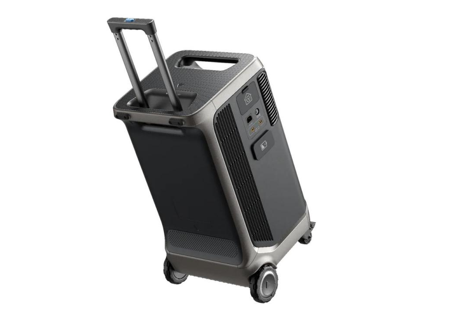
Portable power stations are gaining popularity as fuel-free alternatives to standard generators. Buyers frequently question whether the initial expense merits the advantages. These battery-powered devices generate electricity for camping, home backup, travel, and job sites with no noise or pollution. However, capacity, output rating, and charging flexibility vary significantly between models. Understanding what you get out of a portable power station is important for determining its true worth. This article explores the practical benefits, such as silent operation, emergency preparedness, and solar compatibility. You may determine whether investing in a portable power station is financially viable by examining its performance and long-term usage.
What Benefits Do Portable Power Stations Offer?
Clean and Quiet Power for Indoor and Outdoor Use
Portable power stations provide energy without burning fuel, resulting in no odors or engine noise. During power outages, users may securely utilize them indoors without being concerned about carbon monoxide. Campers like silent performances at night, especially in communal campsites. These systems, unlike gas generators, need less maintenance because there are no moving engine components. Most versions include many AC outlets, USB ports, and DC outputs, making them suitable for charging phones, laptops, drones, and small gadgets. Their small shape makes them convenient to move in automobiles or RVs. Portable power stations are an ideal alternative for consumers who value convenience, safety, and silent operation.
Backup Power for Emergencies and Short Outages
Portable power stations provide reliable backup during a brownout or blackout. Depending on capacity, homeowners can leave lights, freezers, routers, and medical equipment running for several hours. These devices start quickly when a button is pressed, unlike fuel generators. Engine maintenance and gasoline storage are not required. After grid power returns, many models immediately recharge using wall outlets, regaining their readiness. Transfer switches are supported by some for safer incorporation in the house. They provide reliable support for critical circuits, even if they might not be able to power entire homes for days at a time. Portable power stations provide practical resilience and peace of mind for emergency preparedness.
See also: The Silent Consultant: Leveraging Automated Insights for Small Business Growth
Solar Charging and Energy Independence Options
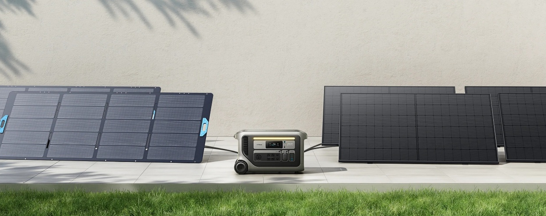
Users may produce renewable energy outside the grid thanks to the capability for solar charging included in many portable power stations. During the day, customers may recharge their batteries by attaching suitable solar panels. This characteristic minimizes long-term operational expenses and dependence on fuel. Remote working sites, RV travel, and camping excursions are all good uses for solar charging. Additionally, it offers backup when grid power is unavailable during prolonged outages. Integrated MPPT controllers maximize charging effectiveness under varying solar conditions. While weather and panel wattage affect charging speed, solar compatibility adds flexibility. Portable power stations provide a flexible and clean option for those looking to become energy independent.
The Best Portable Power Stations Worth the Investment
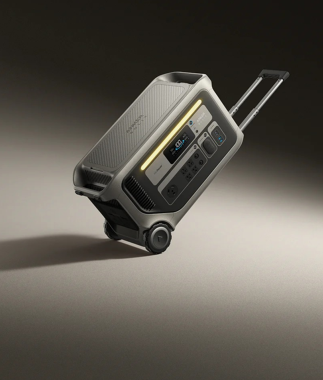
Anker SOLIX F3800 Plus Portable Power Station
The Anker SOLIX F3800 Plus provides high-capacity, whole-home backup with scalable performance. It starts at 3.84kWh with 6,000W AC output and goes up to 53.8kWh and 12,000W, powering anything from refrigerators to central air systems. The dual 120V and 240V support, as well as the built-in NEMA L14-30 connector, enable direct connection to heavy-duty appliances, EVs, and RVs without the need for a converter. The system can absorb up to 3,200W of dual 165V solar input and charges with a 240V wall or 6,000W generator for speedy recovery. With plug-and-play expansion, app-based monitoring, Storm Guard auto-charging, and 3,000-cycle EV-grade LFP batteries, it provides dependable, long-term energy independence.
Anker SOLIX F3000 Portable Power Station
Anker SOLIX F3000 provides adaptable, high-output backup power with intelligent energy management. When coupled, it delivers 3,600W at 120V and increases to 7,200W at 240V, enough to power important or heavy-duty equipment. Under ideal sunlight, the device may be recharged in around 1.5 hours using dual solar inputs of up to 2,400W (60V and 165V). It provides 3,600W pass-through charging when recharging by generator or AC. Capacity ranges from 3kWh to 24kWh for week-long backup. With ultra-low idle usage, a refrigerator may run for up to 42 hours. The 35 dB operation, 20 ms switchover, and InfiniPower™ durability assure consistent, long-term performance.
Anker SOLIX C2000 Gen 2 Portable Power Station
The Anker SOLIX C2000 Gen 2 provides efficient, compact backup power for home and RV applications. With less than 10W idle usage, it can power a dual-door fridge for up to 32 hours, or 64 hours with the extendable 4kWh capacity of the BP2000 (Gen 2) battery. It has a rated output of 2,400W and a peak power of 4,000W, making it suitable for 99% of appliances. AC, solar, gas generator, 800W alternator charging, and other recharge options are available, with a maximum charge of 100% in just 58 minutes. It weighs 41.7 pounds and works softly at 30 decibels, using LFP batteries certified for 4,000 cycles and a 10-year lifetime.
Conclusion
When paired with practical demands, portable power plants can be financially worthwhile. With no engine noise or fuel storage, they provide clean, silent power for both indoor and outdoor usage. They offer a quick and reliable backup for critical appliances in case of crises. Long-term energy savings and flexibility are two benefits of solar charging. However, before making a purchase, customers need to think about battery capacity and power constraints. For whole-house coverage, these devices don’t take the place of big backup generators. They provide safety, portability, and convenience instead. A portable power station may be a useful tool for everyday power reliability, travel, and preparation if it is correctly selected.